Deploying the EDGE-RT28 Industrial Router Board: 3 LAN + 1 WAN, Wi-Fi 6 and ImmortalWrt
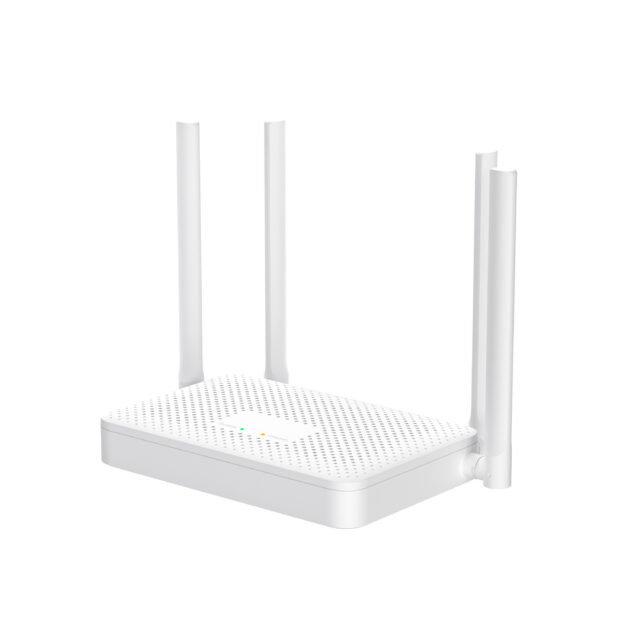
The dividing line between an industrial router and a consumer one is not the number of antennas. It comes down to three things: whether you can flash your own firmware, whether it runs reliably over the long term, and whether the interfaces can be customised per project. Those three determine whether you buy a finished product or take a board and define the product yourself.
Why industrial routing wants a flashable platform
Networking requirements on site are usually very specific: multi-segment isolation, policy routing, VPN tunnels, traffic shaping, serial pass-through. Off-the-shelf routers expose only a limited feature set, so custom needs end up waiting in a vendor’s queue. On an OpenWrt / ImmortalWrt platform, all of that is something you write and install yourself.
The 03R EDGE-RT28 is designed along exactly those lines: a Rockchip RK3528 quad-core Cortex-A53 @2.0GHz SoC, DDR3 4GB memory and 128GB eMMC 5.1 storage, with official ImmortalWrt and mainline OpenWrt support. 128GB of on-board storage is rare at this price point — logs, containers and plugin packages all have somewhere to live, with no USB stick required.
Networking: what 3 LAN + 1 WAN really buys you
EDGE-RT28 integrates 3× 10/100/1000M LAN plus 1× 10/100/1000M WAN, all configurable. In industrial settings, three ports allow physical separation of the internal device segment, the management segment and the external segment — closer to on-site practice than a single port with VLANs, and easier to get signed off.
Wireless is Wi-Fi 6 at 2.4G 574Mbps and 5G 2402Mbps with 2×2 MU-MIMO and 4dBi/5dBi antenna gain. A Mini PCIe slot allows 4G/5G module expansion, useful where cabling is difficult or mobile connectivity is needed.
Interfaces and power
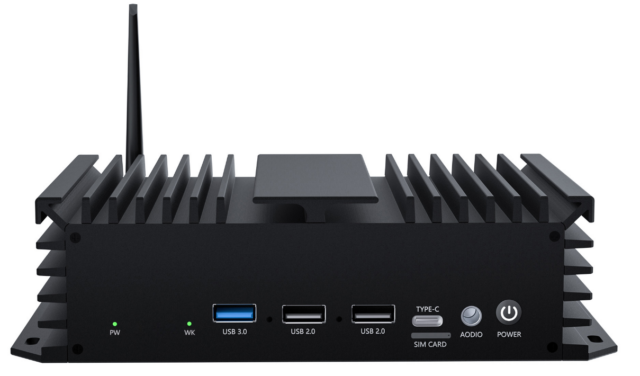
Beyond Ethernet, the board provides USB, HDMI and a TF card slot. Power input is DC 12V/3A, with a maximum system draw of roughly 20W and a weight of 0.8kg. The operating range is -10℃ to +60℃. At 20W it can sit inside a fanless metal enclosure running continuously — important in dusty or hard-to-service locations.
Typical deployments
Industrial 4G/5G routers, edge gateways, AI edge inference nodes, smart IoT terminals, and indoor or outdoor digital signage. What these share is a need for local compute and connectivity at the same time, in environments where an ordinary commercial router does not belong.
Advice for OEM projects
When a project needs differentiation in enclosure, interfaces or firmware behaviour, buying a finished router tends to run into feature boundaries. Using a flashable board such as EDGE-RT28 as the base, and concentrating customisation in the application layer and mechanical parts, is a shorter and lower-risk route. Full hardware specifications and interface documentation are on the EDGE-RT28 product page.