X88 Series TV Box Lineup: S905X3 vs S922X vs H313 vs RK3399 vs RK3566
The X88 series is an unusual line in the TV box market: it spans three silicon vendors — Amlogic, Allwinner and Rockchip — and covers several price tiers from entry to flagship. Buyers and channel partners keep asking the same question. They are all X88, so why can the price differ several times over? The answer is the SoC.
How the five platforms differ
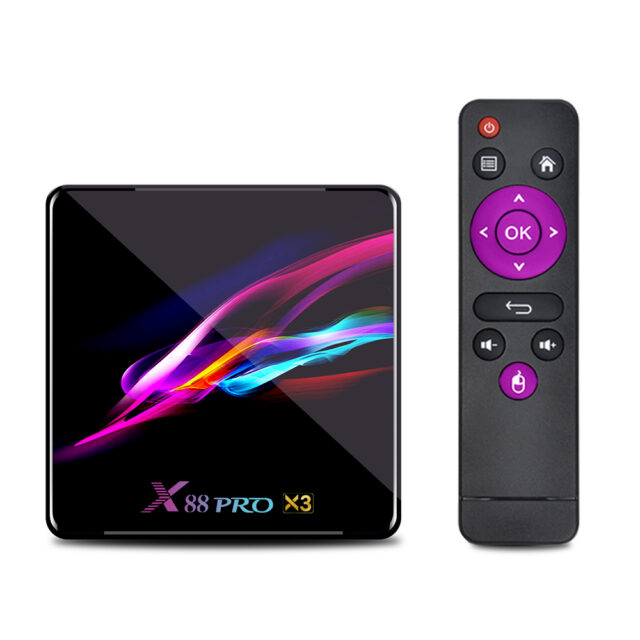
The X88 PRO X3 runs an Amlogic S905X3 quad-core Cortex-A55 with Mali-G31 MP2, paired with 4GB DDR and 32GB eMMC (64/128GB optional). It supports 8K@24fps and 4K VP9/H.265/H.264 hardware decoding with HDMI 2.1 output, plus a front-panel clock display — a very stable value point for HD media playback.
The X88 King is the performance ceiling of the line: Amlogic S922X hexa-core (4×Cortex-A73 + 2×Cortex-A53), Mali-G52 MP6, 4GB LPDDR4/LPDDR4X with 128GB eMMC, gigabit Ethernet and Bluetooth 5.0. The six-core A73 layout makes a visible difference in app launch and multitasking — the right pick when smoothness matters, or when running games and heavier applications.
The X88 PRO T goes the other way: Allwinner H313 quad-core Cortex-A53, 1GB/2GB memory with 8GB/16GB storage, 100M Ethernet. Its role is clear — everyday playback, hotel guest rooms, and cost-sensitive volume deployments. It is also the most OEM-friendly entry model in the series.
The X99 uses Rockchip RK3399 hexa-core (2×Cortex-A72 + 4×Cortex-A53) with Mali-T860MP4, 4GB + 64GB. Its standout feature is display output: HDMI 2.0a and Type-C can drive two screens simultaneously, with HDR10/HLG support and a Type-C USB 3.1 port. Where dual displays or colour accuracy are required, this is the only option in the lineup.
The X88 PRO20 is the most flexible of the group: RK3566 quad-core Cortex-A55 @1.8GHz with Mali-G52 2EE, up to 8GB memory and 128GB storage, USB 3.0 + USB 2.0, gigabit RJ45, optical SPDIF and HDMI 2.0a. With H.265/VP9/AVS2 hardware decoding and the RK3566 ecosystem behind a gigabit port, it can also take on light NAS and Docker duties as a home server.
Choosing by scenario
Pure playback on a budget: X88 PRO X3 or X88 PRO T. The former adds USB 3.0 and HDMI 2.1; the latter costs less and suits volume orders.
Smoothness and local playback performance: X88 King — six A73 cores and 128GB of storage is the most generously equipped hardware in the line.
Dual display or HDR: X99. Simultaneous HDMI and Type-C output is unique to this model.
One box, several jobs: X88 PRO20 — a gigabit port plus the RK3566 platform leaves the most room to expand.
Two things easily missed when buying
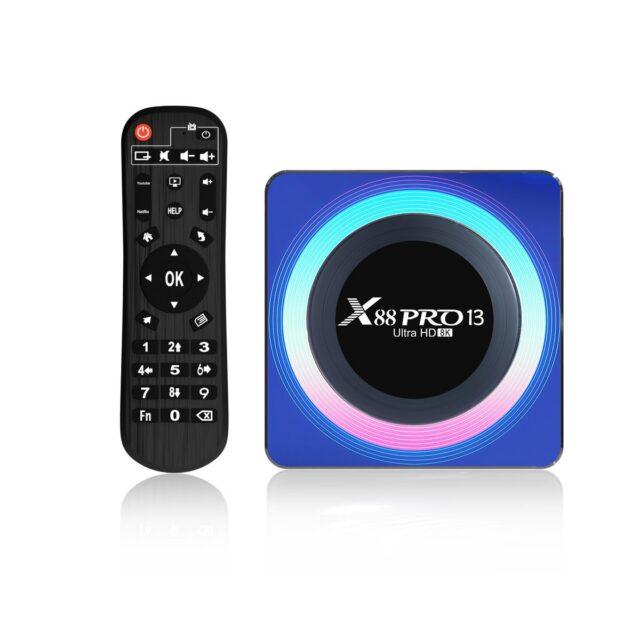
First, the Ethernet port. Models such as the X88 PRO X3, X88 PRO T and X88 PRO 13/14 use 100M RJ45; only the King, X99 and PRO20 offer gigabit. If the deployment relies on streaming high-bitrate content over the LAN or local file sharing, 100M becomes a hard bottleneck — and that difference is rarely visible on a quotation sheet.
Second, OS version and certification. The X88 PRO20 runs Android 11.0, the King and PRO X3 run Android 9.0, the X99 runs Android 7.1 and the PRO T runs Android 10.0. Older systems trade some compatibility with newer apps for better driver maturity and lower cost. The whole X88 series carries CE / FCC / RoHS certification, so export and commercial volume production can reuse the same compliance base.
Full specifications and documentation for every model are available on the X88 PRO20 product page and the corresponding model pages. You are also welcome to contact us for scenario-based selection advice and OEM evaluation.