IPTV Operator Box Selection: A Hardware Framework From the Tender Perspective
Operator-tender boxes and retail boxes are different species. Retail asks whether users like it; a tender asks whether operating cost stays controlled once tens or hundreds of thousands of units are deployed. Ten currency units saved per box becomes a million across a hundred thousand units, while a single truck roll can consume the savings from dozens of boxes.
Tender selection therefore does not centre on the specification table but on total lifecycle cost. This article sets out a framework for judging it.
Compute the Total Before the Unit Price
A tender has three cost segments: acquisition (the box itself), deployment (activation, installation, pairing) and operations (truck rolls, replacements, remote support). Retail thinking counts only the first; tenders must count all three.
That explains why tenders often do not pick the cheapest model: a slightly higher failure rate or weaker remote management costs far more in operations than was saved in acquisition. Writing all three estimates into the selection document gives the discussion a shared basis.
Remote Management: The First Hard Requirement
With devices spread across hundreds of thousands of homes, the only way to control cost is resolving most issues without a visit. That requires dependable remote management: status reporting, remote diagnostics, batch firmware upgrade and remote configuration push.
When evaluating, do not stop at “does it have the feature” — look at behaviour at scale: can an upgrade task resume after interruption, does a failed upgrade roll back automatically, is the frequency and granularity of status reporting sufficient. These details decide whether an upgrade across a hundred thousand units takes hours or days.
Hardware Consistency: Batches Must Not Drift
What tenders fear most is the same model shipping with different hardware across batches — a changed storage part, a different wireless module, a new power design — because firmware then needs re-qualification and operations documentation needs updating. The larger the fleet, the higher that hidden cost.
Selection should therefore require locking of key component models and a change-notification mechanism, written into the contract: component changes must be announced in advance with validation samples supplied. It reads as a purchasing clause and functions as technical risk control.
Software Ecosystem and Certification: Whether the Service Can Run At All
Operator services usually depend on specific content protection and application ecosystems. Whether the required certification can be obtained and the necessary DRM and application frameworks supported stably is a gate that decides success earlier than any hardware parameter.
Distinguish platform capability from certification status: hardware support does not mean certification is in hand. Confirm the certification status and lead time for the target market directly rather than assuming “this chipset should be fine.”
Power and Standby: The Underestimated Long-Term Item
Standby draw per unit looks trivial, but multiplied by a hundred thousand units and the hours in a year it becomes a genuine operating expense — and it is frequently written into tender energy requirements. Resume speed from standby also hits user experience directly: every second of wait turns into support tickets.
Evaluate both standby figure and resume experience, and measure whole-unit standby on a sample rather than reading a chipset datasheet.
From Framework to Model
Condense the requirements into one table: remote management capability / component locking / certification status / standby and resume / three-year operations cost estimate. Reading models against that table turns selection from “comparing specifications” into “comparing fit.”
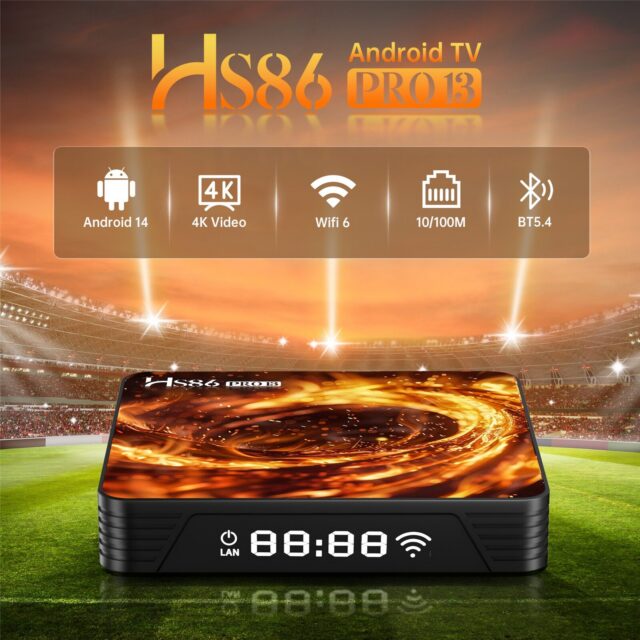
Entry-level and mid-range boxes each have a place in tenders: a basic model such as the HS86 PRO 13 机顶盒 suits the most cost-sensitive tiers with lighter services; one more complete in decode and interfaces, like the X88 PRO 13 机顶盒(RK3528A 安卓 13), suits richer service bundles; projects with higher system and ecosystem demands can look at a newer-platform model such as the HS89 PRO 15 机顶盒(RK3539 安卓 14). The difference is not which is stronger but which fits your tier positioning and operational capability.
Six Things the Selection Document Should State
1. Three-segment cost estimate → 2. Remote management capability list (including rollback and resumable upgrades) → 3. Key component locking and change notification terms → 4. Certification status and lead time for the target market → 5. Measured standby figure and resume time → 6. Fleet deployment and traceability requirements. With these six, tender evaluation has something to stand on.