Hotel TV Box Deployment: What Guest-Room Rollouts Demand
A TV box for a hotel room and one bought for home are entirely different propositions. Home use needs “it plays.” A hotel needs “several hundred units that all behave identically, that guests can use without instruction, and that housekeeping can swap in minutes.” Those three requirements shift the selection criteria completely.
Three Differences From Home Use
First, every user is a first-time user. Guests do not read manuals; the path from power-on to live TV must be short, and anything needing more than two steps becomes a complaint at reception. Second, volume creates an operations problem: hundreds of units spread over floors cannot be maintained one by one, so centralised management is mandatory. Third, replacement has to be fast — a guest is waiting in the room, so the swap window is measured in minutes with no on-site debugging.
These three make boot experience, centralised management and configuration-free replacement the core criteria for hotel projects — not decode performance or benchmark scores.
Boot Experience: Splash Screen, Default Channel and Auto-Start
When a guest turns on the TV they should see live channels or the hotel welcome page — not an Android desktop or an app grid. That requires three things up front: a custom splash screen and boot flow, a default application that launches automatically, and hidden or disabled entries guests do not need (settings, app store, system update).
All three are firmware customisation and must be stated explicitly in the order rather than improvised after delivery. In fleet projects that consistency also governs later complexity — every room must run the same firmware version.
Centralised Management: Bulk Configuration and Remote Operations
Configuring hundreds of units individually is simply not viable. The workable approach is an image plus bulk flashing: configure one unit completely, make it the standard image, and flash the rest from it. That guarantees consistency and cuts deployment time dramatically.
After deployment, remote operations matter too: checking online status, pushing updates in bulk, rebooting misbehaving units remotely. Confirm these capabilities at selection stage, because not every combination of device and firmware supports the same degree of management.
Hardware Shape: Stick or Box
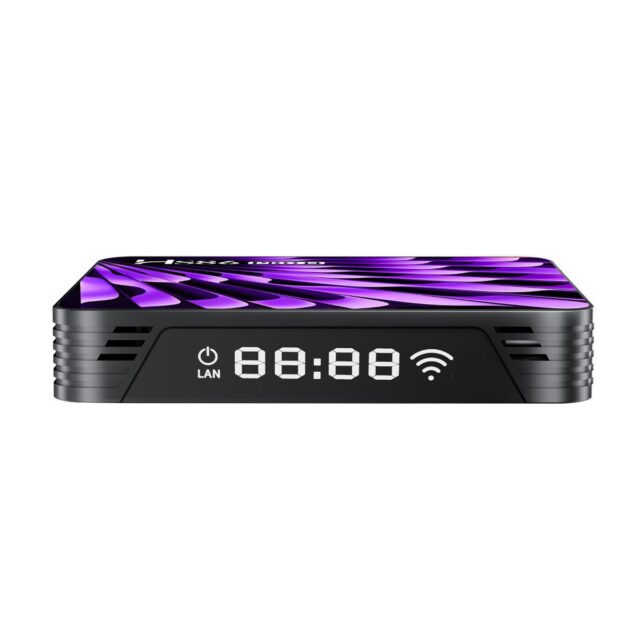
Guest-room TVs are usually wall-mounted or built into a cabinet with limited space behind. A stick plugs straight into HDMI, saving space and cabling, but has poor thermal conditions and few ports, making continuous operation less comfortable than a standalone box. A box has better cooling and power, and is easier to secure, at the cost of space and a power run.
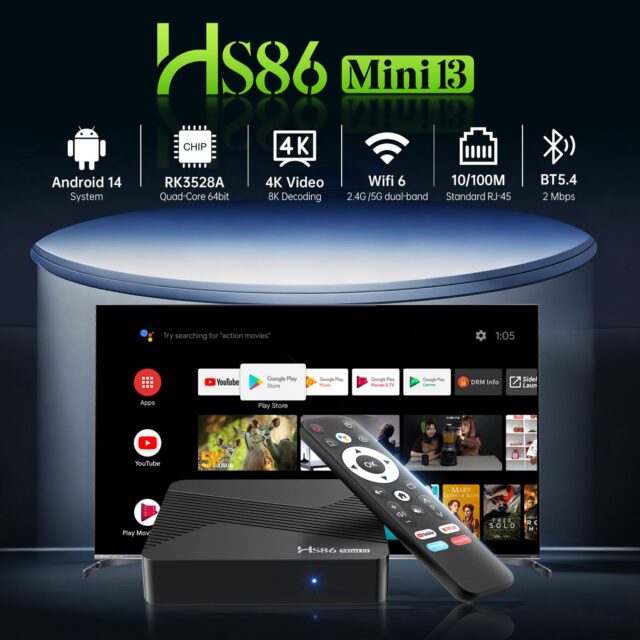
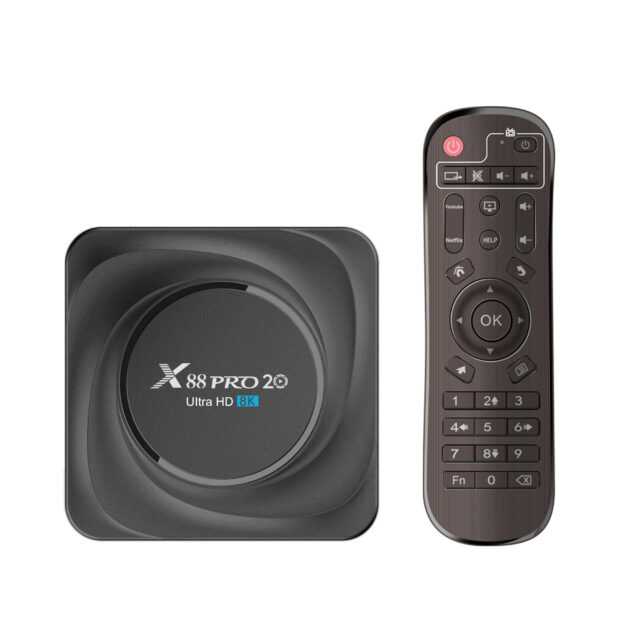
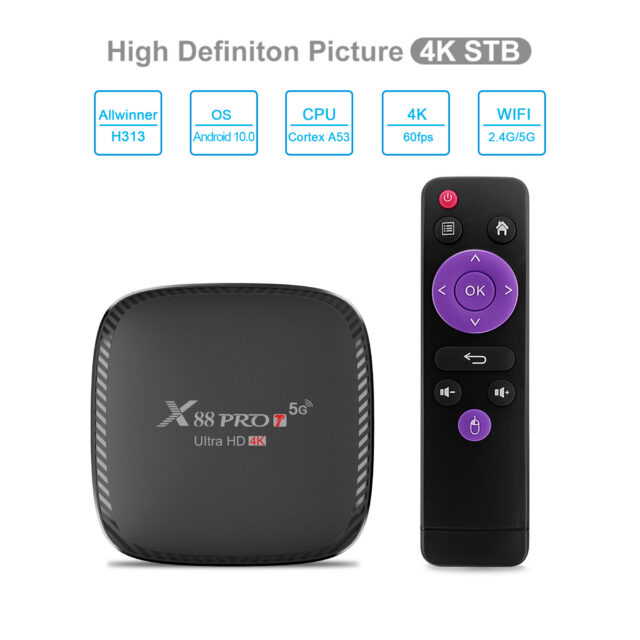
The common choice for hotel projects is a compact box — a small model such as the HS89 MINI 15 机顶盒(RK3539 安卓 14) can hide behind the panel or sit in a bracket, balancing thermals and space. For budget-sensitive retrofits where space behind the TV is genuinely tight, an entry-level shape like the X88 PRO 14 机顶盒(RK3518 安卓 14) is also viable, but watch thermal conditions under continuous operation.
Power and Installation Details
Two details are routinely missed at planning stage. Power source: TV USB port or a separate adapter? USB from the TV can be unstable in guest rooms — the port may lose power when the TV stands by, causing repeated reboots — so independent power is more reliable. Securing the unit: the box needs a proper fixing (bracket, cable tie, adhesive mount), or housekeeping or guests will knock it loose.
Also confirm before selecting: where the HDMI port sits on the room TV, and whether CEC works (controlling the box with the TV remote). Poor CEC compatibility leaves guests wondering which of two remotes to use.
What to Watch When Buying
Beyond unit price, hotel projects should confirm four things: firmware customisation capability (splash screen, default app, disabled items), bulk flashing support, batch consistency (one firmware and hardware version per project), and spares and swap convenience (can a replacement be fitted and self-configured quickly).
A mechanically stable, high-volume model such as the HS86 PRO 14 机顶盒(4K 安卓 14) usually gives better long-term supply assurance, which matters for room projects that keep re-ordering after initial rollout. Prepare three figures — room count, TV model and customisation requirements — before discussing, and the proposal will be far more precise.