Thermal Design for Edge Boxes: Fanless, Active or Passive Cooling
When an edge device fails, the leading cause is usually not software but thermals. A box that performs beautifully in an air-conditioned server room may not survive a summer after being moved to an uncooled distribution room. Cooling should be settled at selection time.
The trade-offs between three cooling approaches
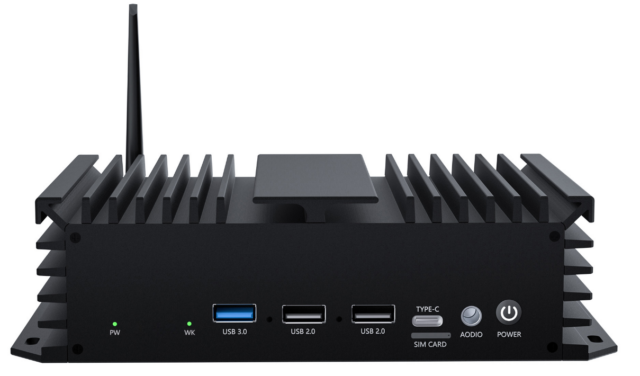
Fanless passive cooling conducts heat through the enclosure. No moving parts means the best dust and lifetime behaviour, but cooling capacity is limited, so it suits low-to-mid power platforms. Active cooling with a fan leaves generous thermal headroom and can handle high-power chips, at the cost of the fan becoming the lifetime weak point and requiring dust protection. Hybrid designs run passively and spin up the fan only under load — a compromise.
Power draw decides the form factor
Look at the platform’s typical power draw first, then choose the cooling approach. The 02A EDGE-RK3576 V1.1 is built on RK3576, which balances performance and power well: clearly above entry-level quad-core in compute, yet far below a flagship platform in power and heat. That makes it a good fit for fanless design.
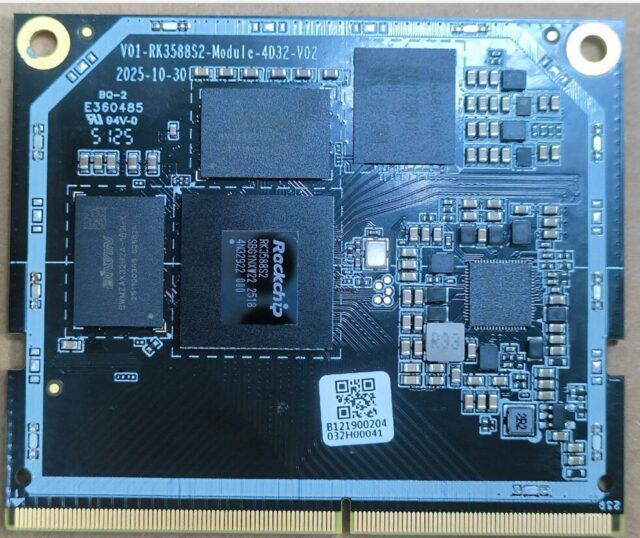
If eight-core compute is required, the 01H MINI PC-RK3588 takes the mini PC form, balancing performance and size for desktop terminals, edge servers and digital signage. A box enclosure is inherently better suited to adding cooling structure than a bare board, and it settles part of the engineering work between validation and deployment ahead of time.
Size the design for worst-case ambient
A common mistake is designing cooling against server-room temperature (around 25℃) when the actual deployment is an uncooled workshop or outdoor cabinet where internal temperatures can exceed 50℃ in summer. Design the margin against the worst-case ambient, not the average.
Where the environment is genuinely harsh, the 05A IPA-RK3588 industrial control board supports -20℃ to +70℃ operation with an MTBF of ≥ 50,000 hours — a platform designed for exactly that.
Details that get overlooked
First, thermal interface material and mounting pressure: interface resistance often matters more than heatsink area. Second, dust — a fanless design still needs a cleanable thermal path. Third, long-run throttling behaviour: test continuously at full load rather than relying on a short benchmark burst. Specifications are on the EDGE-RK3576 V1.1 product page.