Industrial Ethernet and PoE Selection: Standards, Isolation and Common Pitfalls
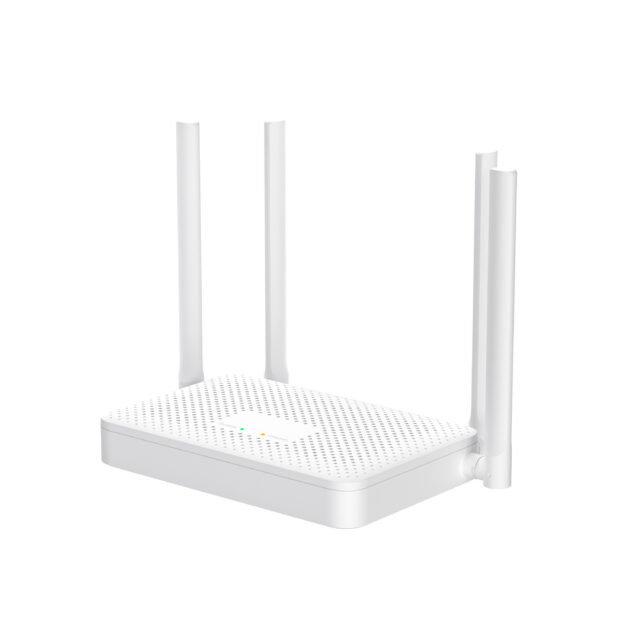
If every camera, wireless access point, electronic label and door reader on an industrial site needed its own power run, installation cost and failure points would multiply. PoE’s value is solving power and data over a single cable. But its demands on hardware design are higher than most people expect.
First, distinguish the power standards
PoE spans several generations with very different capabilities. The earliest, 802.3af, delivers about 15.4W per port with roughly 12.95W available at the powered device, and corresponds to what people usually call PoE. 802.3at (PoE+) raises port power to 30W with about 25.5W at the device, enough for pan-tilt cameras and dual-band access points. 802.3bt splits further into two levels of roughly 60W and 90W for high-performance access points, displays and similar equipment.
Two directions matter when choosing: the power sourcing equipment (PSE) and the powered device (PD) must match in standard. An af switch will not bring a bt device up; conversely, a bt source can usually power an af device, because negotiation is backward compatible. That asymmetry is useful when troubleshooting.
Power modes and wiring pairs
Earlier standards define Alternative A and Alternative B, the former carrying power over the data pairs and the latter over the spare pairs. To deliver higher power, 802.3bt uses all four pairs simultaneously. That directly affects hardware design: network magnetics must be rated for PoE current, and RJ45 connectors and routing must be selected according to current rather than reusing an ordinary Ethernet port design.
On cabling, Cat6 or better is advisable for high-power scenarios, because resistive voltage drop directly affects whether the powered device works reliably. This becomes pronounced over long runs, and the calculation must account for both the outgoing and return conductor length.
Isolation and protection
Electromagnetic interference and surges in industrial environments are far more severe than in offices. PoE port isolation withstand voltage, common-mode rejection and surge protection all need dedicated design. In practice, the selection and layout of port protection components affects field failure rates more than the choice of main processor.
Thermal design is another commonly underestimated issue. A powered device converts most of the energy it receives into heat, so an enclosed housing without thermal design will readily throttle or hang in high summer temperatures. This is especially acute for outdoor installations or sealed cabinets.
Additional industrial network requirements
Industrial sites usually also require network redundancy. The common approach is a ring topology with rapid spanning tree or a proprietary ring protection protocol, switching to a backup path within milliseconds of a link break. That capability is determined by the switch silicon and firmware, so confirm it during selection rather than discovering the lack of support during commissioning.
The 03R EDGE-RT28 (RK3528) industrial router board targets industrial routing and gateway scenarios, while the 05A IPA-RK3588 industrial control board and the 02A EDGE-RK3576 V1.1 target edge nodes with higher compute demands. The value of such platforms is that network interfaces, protection and industrial-grade components are designed into the hardware, leaving the software side free to focus on business logic.
A checklist of common pitfalls
One: using network magnetics not rated for PoE, causing severe heating and degraded performance at high current. Two: ignoring cable voltage drop, leaving the powered device under-volted over long runs. Three: mixing an af source with a bt device. Four: omitting thermal design, causing frequent reboots in hot environments. Five: choosing a ring protocol from a feature list without validating actual switchover time. Six: neglecting lightning and surge protection, so field-installed equipment fails en masse during the rainy season.
Conclusion
The key to PoE selection is not whether it is “supported” but whether specific metrics — power class, isolation and protection, thermal design and redundancy — match site conditions. Establish the device list, per-port power requirement, maximum cable run and ambient temperature range during the design phase, and set the hardware specification from there.