Building a Private Cloud on RK3588: 4-Bay SATA, Dual 2.5GbE and On-Board AI
Over the past two years, “keep your own data” has moved from a hobbyist habit to a practical requirement for small teams and households alike. Rate limits, price changes and shifting terms on public cloud drives have pushed self-hosted private cloud back onto the agenda. What really determines the experience, though, is not which OS you install — it is whether the board underneath can supply the bandwidth, drive bays and compute you need.
Why the RK3588 tier
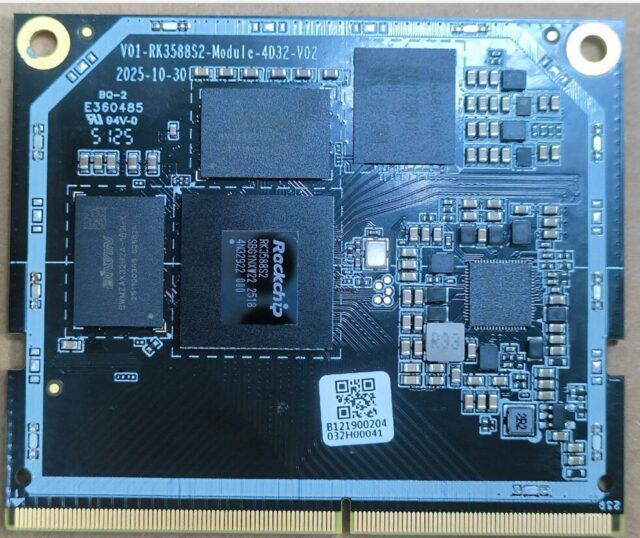
Many entry-level builds rely on quad-core A55 class silicon. That is fine for plain file serving, but once you layer on photo indexing, transcoding and Docker containers, it starts to strain. RK3588 uses an eight-core 4×Cortex-A76 + 4×Cortex-A55 layout with a Mali-G610 MP4 GPU, supporting 8K video decode and HDMI 2.1 output. It is the tier where running several workloads at once does not make them drag each other down.
Drive bays and storage expansion
The first bottleneck in any private cloud is the storage path. The 04A NAS-RK3588 network storage board carries 4× SATA 3.0 for 2.5″ or 3.5″ drives, plus an M.2 NVMe slot for a system or cache disk. The “SATA for data, NVMe for the OS” split is one of the lower-maintenance arrangements in a self-built NAS: a failed system disk does not endanger your data, and capacity upgrades do not require a reinstall.
What dual 2.5GbE actually changes
A gigabit port tops out around 118MB/s — a single spinning disk can saturate it, and with several drives in parallel the port becomes the bottleneck. NAS-RK3588 provides 2× 2.5GbE, comfortably above 280MB/s per port and stackable with a link-aggregation capable switch. For teams that regularly move large media assets or run local backups, this tier of networking is felt more directly than a CPU upgrade.
The NPU is the underrated part
NAS-RK3588 includes a 6 TOPS NPU with RKNN and TensorFlow Lite support. Its value is not running large models — it is offloading tasks such as face clustering in photo libraries, video structuring and surveillance clip filtering from the CPU. Anyone who has built a photo server knows that the first index pass over tens of thousands of images can pin the CPU for hours. With the NPU taking part, that load drops noticeably and the machine stays quieter day to day.
Who it suits
If your requirement is file sharing plus photos, a media library and a handful of container services — with AI capability wanted later — the RK3588 tier is a reasonable landing point. If you only need a simple file box, a quad-core A55 platform is already enough and there is no reason to pay for headroom you will not use.
04A NAS-RK3588 ships with a complete hardware specification, interface description and flashing documentation, making it a practical base for a private cloud, small storage server or edge node. See the NAS-RK3588 product page for details and downloads.