OpenWrt or ImmortalWrt? Mainline, Forks and Flashing Risk
In industrial router or software router projects, the firmware platform often matters more to the outcome than the hardware specification. OpenWrt and ImmortalWrt frequently appear together, but their relationship and the trade-offs are not always clear.
How the two relate
OpenWrt is the mainline open-source router system: a large community, thorough documentation and stable long-term maintenance. ImmortalWrt is a fork of OpenWrt aimed mainly at Chinese users and hardware, with more localisation and driver additions, so support for new hardware and new SoCs often lands sooner.
In short: mainline wins on stability and long-term support, the fork wins on hardware enablement speed and local ecosystem.
Choosing between them
If a project needs long-term maintainability, security updates and the hardware is already on the mainline support list, mainline OpenWrt is the safest choice. If the hardware is new, or you need drivers not yet merged upstream, ImmortalWrt saves time.
The 03R EDGE-RT28 industrial router board supports both, shipping complete ImmortalWrt and mainline OpenWrt enablement. For OEM projects that matters: the choice can follow the end customer’s technical preference rather than locking you to one platform.
Where flashing risk comes from
First, bootloader and partition layout: different firmware may expect different partitioning, and a wrong flash can leave the device unbootable, usually recoverable only through serial or USB flashing tools. Second, closed-source drivers: Wi-Fi chipset drivers often need extra firmware packages, and a missing one shows up as no wireless at all. Third, upgrade paths: back up configuration before crossing major versions rather than overwriting.
Hardware has to match too
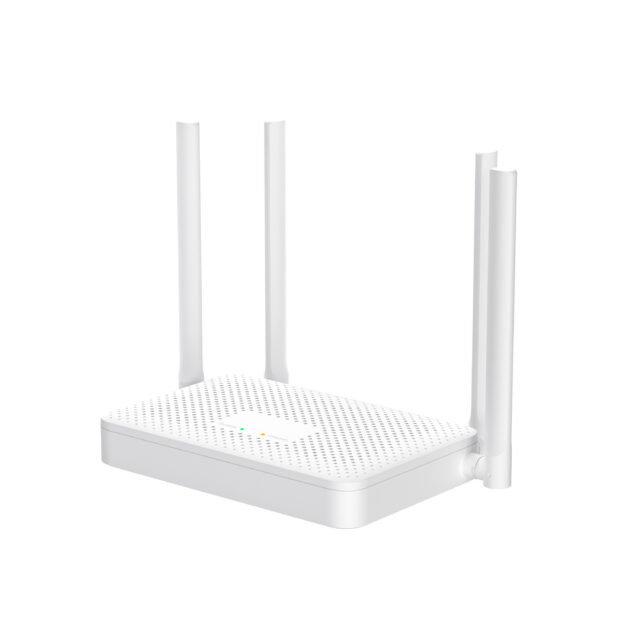
EDGE-RT28 uses a Rockchip RK3528 quad-core Cortex-A53 @2.0GHz with 4GB DDR3 memory and 128GB eMMC 5.1 storage. 128GB of on-board storage is uncommon at this tier — logs, containers and plugin packages all have somewhere to live without an external USB stick. On networking it integrates 3× gigabit LAN plus 1× gigabit WAN, all configurable, with Wi-Fi 6 at 2.4G 574Mbps / 5G 2402Mbps and 2×2 MU-MIMO, plus a Mini PCIe slot for 4G/5G modules.
Recommendation
Write firmware support into the requirements rather than finding out after purchase. A platform with mainline support costs far less to maintain over the following three to five years. Specifications are on the EDGE-RT28 product page.